Oslo’s Waterfront Opera House Is a Modern Marvel — and You Can Walk Right on Its Sloping Rooftop for Panoramic Views
All recommendations on World Wild Schooling are independently selected by our editors. We may earn an affiliate commission from purchases made through our links.
The best things to do in Oslo include visiting the Fram Museum, a haven for polar expedition enthusiasts, the historic Akershus Fortress, and the iconic Oslo Opera House. As the capital of Norway, Oslo welcomes over 5 million visitors each year.
Highlights include the Viking Ship Museum, where you can see well-preserved ships from over 1,000 years ago, and the Vigeland Sculpture Park, home to over 200 expressive sculptures by Gustav Vigeland.
You can also stroll along the revitalized Aker Brygge waterfront or hike up to Holmenkollen Ski Jump for panoramic views over the city and the fjord.
To create this list, we combined traveler feedback from sites like Google and TripAdvisor with local insights. Our goal was to include various activities that combine Oslo’s highlights and hidden gems.
Swipe and Vote: See What Travelers Recommend
Stuck in Oslo? What’s your must-do pick when pretending to be an experienced traveler?
This is a swiper quiz, swipe right for yes, swipe left for no.
 © ShapikMedia / Adobe Stock
 © xbrchx / Adobe Stock
 © Kathrine Andi / Adobe Stock
 © Marco Saracco / Shutterstock
 © Trabantos / Shutterstock
Results
 1
1
 2
2
 3
3
 4
4
 5
5
🎧 Listen Instead: Your Article in Podcast
Enjoy this article in podcast form—perfect for staying informed or listening on the go.

Highlights at a Glance
Visit the Fram Museum

Visiting the Fram Museum is one of the most popular things to do in Oslo. This fascinating museum is dedicated to the history of Norway’s polar exploration. It contains exhibitions of the world’s most famous voyages, the main highlight being the world’s strongest wooden ship, the Fram.
Launched in 1982, the Fram was used in Arctic and Antarctic expeditions by Norwegian explorers Fridtjof Nansen, Otto Sverdrup, Oscar Wisting, and Roald Amundsen. At the museum, you can board the ship and explore its cabins, lounges, engine room, and cargo hold.
Another highlight is the Gjøa, which, between 1903 and 1906, was the first ship to sail through the entire Northwest Passage. It’s worth noting that entry to the Fram Museum is included in the Oslo City Pass.
Read also: Natural Wonders in Europe Worth Visiting
Explore the Oslo Fjord

Exploring the Oslo Fjord is one of the most exciting experiences in Oslo. The perfect destination for outdoorsy travelers, the Oslo Fjord is a vast area of idyllic islands, scenic hiking trails, quaint villages, and picturesque swimming spots. You can even spot magnificent wildlife species like the white-tailed eagle.
There are two main ways to explore the Oslo Fjord: self-guided or on a tour. You can easily travel between the islands using Oslo’s ferry services, which leave Rådhusbrygge 1 (City Hall Pier 1) and Aker Brygge. Popular islands include Hovedøya, Gressholmen, and Lindøya.
If you’d prefer to visit the fjord on a tour, I recommend this Oslo Fjord tour. You’ll explore the fjord on a traditional sailing ship and benefit from audio commentary.
Read also: Most Beautiful Cities in Europe
Photograph Akershus Fortress

One of Oslo’s most famous sights is the Akershus Fortress. Built in the 1300s, this medieval structure protected the city and housed the royal family. Its strategic location at the end of the headland helped it withstand several sieges throughout history.
The fortress’s impressive architecture, rich history, and scenic location make it a popular place to photograph. In my opinion, one of the best places to photograph the fortress is from the water. If you visit the Oslo Fjord, you’ll pass the medieval structure on your way out of the harbor.
You’ll struggle to find a better view of the fortress anywhere else in the city. Alternatively, you can stand on the other side of the waterfront.
Read also: Quick City Getaways in Europe
Walk Around Frognerparken

Walking around Frognerparken, the largest park in central Oslo, is one of the most relaxing things to do in Oslo. It covers an area of 111 acres (45 hectares) and is home to charming walking paths and several unique attractions. One of the main draws to the park is the Vigeland Sculpture Park.
This one-of-a-kind attraction comprises over 200 bronze, granite, and wrought iron sculptures created by Gustav Vigeland. Highlights include Vigeland’s Fountain, the Monolith, and Sinnataggen (Angry Boy). Other sights to look for in the park include Frogner Manor, Oslo City Museum, and the Gustav Vigeland Statue.
We recommend spending two or three hours in the park, which has so much to see. Luckily, the park is open 24/7 and free to enter.
Read also: European Cities With Impressive Architecture
Eat Until Your Heart’s Content at Oslo Street Food

Food enthusiasts must visit Oslo Street Food during their Oslo city break. Tucked away in central Oslo, this bustling food hall serves up a wide range of delicious food and drink from around the world. Whether you’re in the mood for traditional Norwegian cuisine, Indian delights, or yummy Greek gyros, there’s something for everyone.
The street food market has 16 food stalls, two bars, and a complimentary water station. My favorites were the Mexican tacos, Thai noodles, and Norwegian bread bowls. I highly recommend the Norwegian bread bowls.
For those who don’t know, bread bowls are hollowed-out loaves or rolls of bread filled with soups, stews, and other dishes.
Read also: Top European Destinations for Food Lovers
Enjoy the Views From the Oslo Opera House

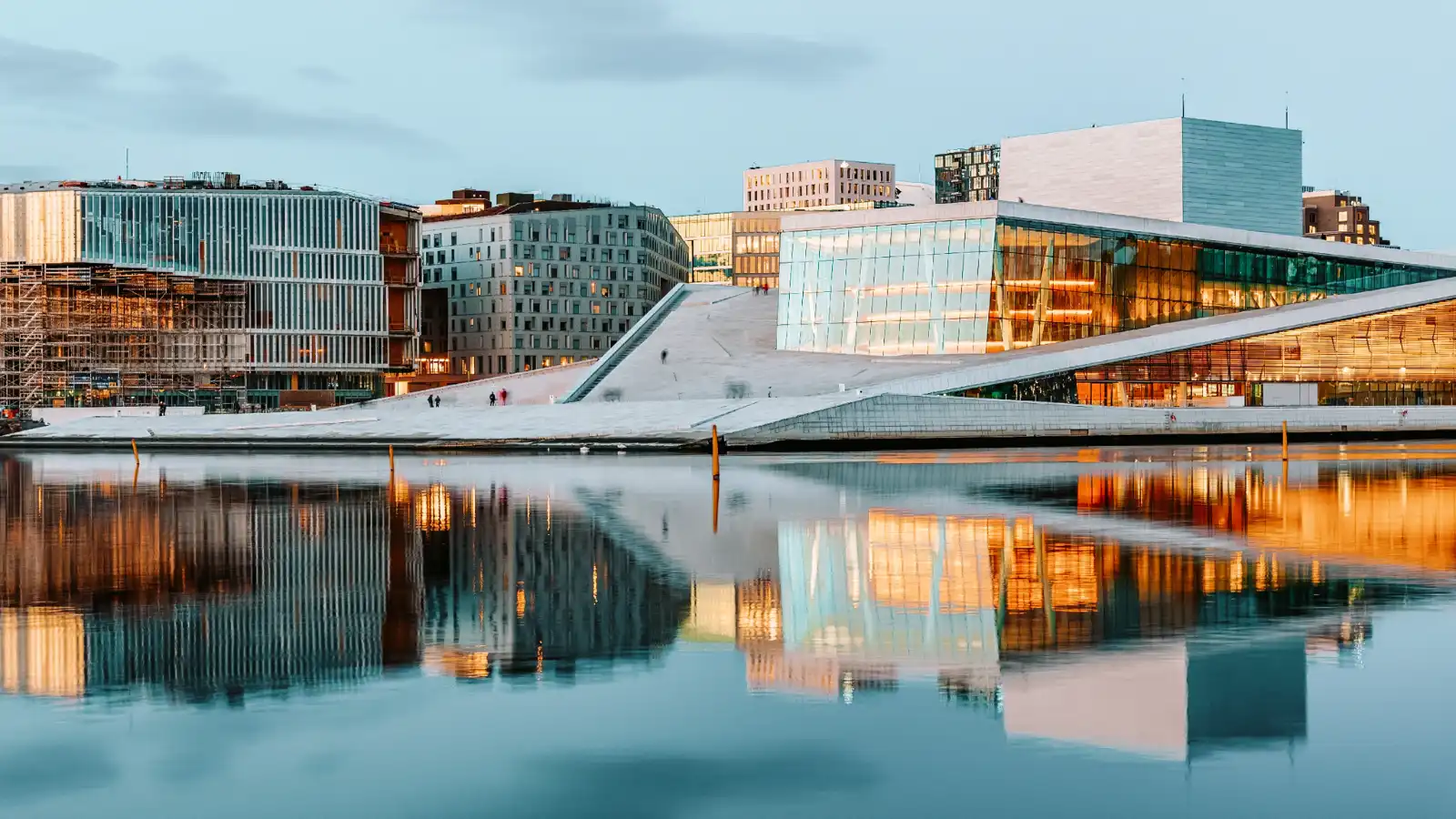
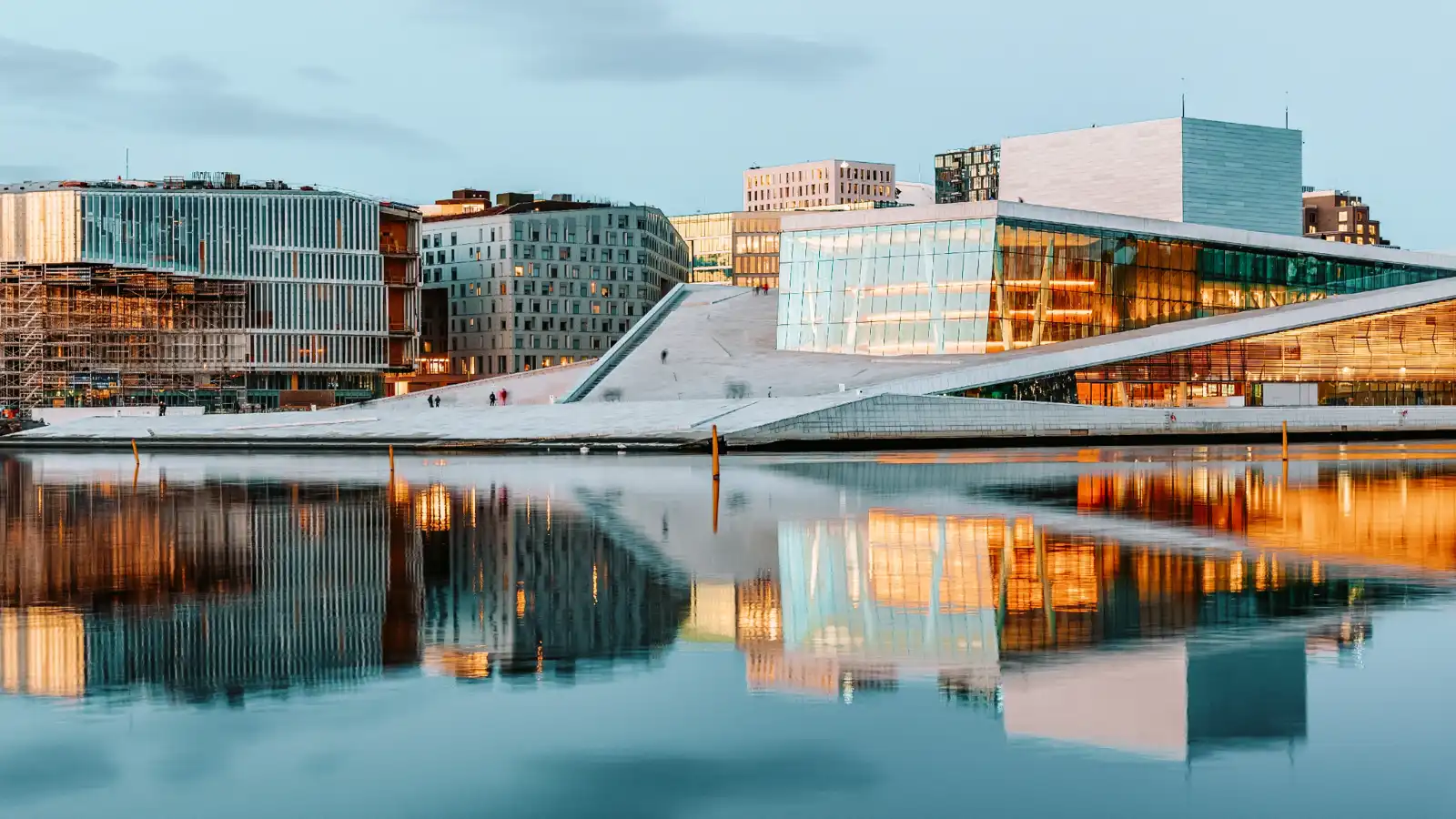
The Oslo Opera House is one of the most beautiful buildings in Norway’s capital city. It opened in 2008 and is renowned for its unique, iceberg-like design, dazzling marble and white granite exterior, and sloping roof. The Opera House is home to the Norwegian National Opera and Ballet.
However, we recommend visiting the building for the views it offers from its roof. Brilliantly, the Opera House was designed to allow visitors to walk on its roof. There, you’ll find an observation platform that offers outstanding city views.
You can see most of the city, the Oslo waterfront, and even part of the Oslofjord. The views at sunrise and sunset are particularly impressive.
Read also: Romantic European Destinations
Visit the Oslo Reptile Park

Save this
Visiting the Oslo Reptile Park is one of the best things to do in Oslo with children. As its name would suggest, the park primarily specializes in reptiles. However, there are other animals and mammals to see.
In fact, there are over 100 species to spot in the park. Some of the reptile park’s most exciting species include marmosets, boa constrictors, crocodiles, and piranhas. One of the cool things about Oslo Reptile Park is that visitors can get closer to the animals.
Visitors can sometimes hold various snake and spider species during keeper talks and shows. Oslo Reptile Park is open daily from 10:00 until 18:00. Tickets cost 230 NOK ($21.60) for adults and 200 NOK ($18.80) for children.
Read also: Glamorous Cities in Europe
See How the Other Half Lives at the Royal Palace

If you want to see how the other half lives, stop by the Royal Palace. Built in the 19th century, this imposing building is the official residence of the current Norwegian monarch. Unsurprisingly, it is one of Norway’s most iconic buildings.
You’ll find the palace on a rise, the Bellevue, at the end of Oslo’s main street, Karl Johans Gate. Reminiscent of Buckingham Palace in London, United Kingdom, the Royal Palace will blow you away with its beautiful Neoclassical architecture. Its vibrant yellow facade features grand columns, carvings, and arched entryways.
Meanwhile, lush gardens surround the palace. Inside, the palace oozes elegance and wealth, featuring dazzling chandeliers, grand halls, and luxurious reception rooms. Unfortunately, the palace’s interior is only open to visitors between June 21st and August 17th.
Read also: Most Beautiful Neighborhoods in Europe
Spend a Few Hours in Grünerløkka

Grünerløkka is one of Oslo’s most happening neighborhoods. This vibrant part of the city is well known for its lively atmosphere, street art, quaint boutiques, stylish bars, and cozy cafes.
One minute, you’ll enjoy a refreshing cup of coffee in a cafe. Next, you’ll hunt down bargains and souvenirs in the vintage shops and flea markets.
One of the main highlights is Birkelunden, a charming park that hosts an outdoor second-hand market every Sunday. Then, there’s Sofienberg Park, a popular spot for outdoor activities, picnics, and relaxation.
The park holds the Piknik i Parken (Picnic in the Park) music festival in June. In Grünerløkka, you can also enjoy a picturesque stroll along the Akerselva River and tuck into delicious cuisine at Mathallen Oslo.
Read also: Underrated European Cities
Learn More About Norway in the Historical Museum

The Historical Museum is among the best places to learn about Norway’s fascinating history. Opened in 1904, this museum houses Norway’s largest collection of objects from pre-historic times and the Middle Ages. Among the museum’s exciting collections are artifacts from Norway’s Viking Age.
You’ll thoroughly enjoy learning more about the Vikings through ancient artifacts like swords, golden jewelry, and tools. The museum’s most prized possession is the world’s best-preserved Viking Helmet, the Gjermundbu Helmet, which dates back to the 10th century.
The Historical Museum also has Norway’s largest coin collection and exhibits covering Norway’s medieval history. Better yet, you can also see treasures from ancient Egypt, including sarcophagi and sculptures. The museum is open Tuesday through Sunday from 11:00 until 16:00.
Read also: Budget-Friendly European Cities
Relax in a Sauna

Relaxing in a sauna is one of the best experiences in Oslo if you want to unwind. Saunas are incredibly popular with locals and travelers in Oslo, especially since floating saunas emerged in the fjord and on the waterfront. Aside from being an excellent way to relax, it is a great way to enjoy the culture.
Many saunas are located in Oslo, but arguably, the best are the ones on the waterfront across from the Opera House.
Operated by KOK, these floating saunas offer a wonderfully relaxing experience overlooking the Opera House, Munch, and the She Lies sculpture. KOK also has a sauna in the heart of Aker Brygge, with exceptional views of Akershus Fortress.
If you’re feeling luxurious, you could explore the Oslo Fjord in style on the company’s sauna boats.
Read also: Insta-Worthy Spots in Europe
Admire the Vessels and Maps in the Kon-Tiki Museum

The Kon-Tiki Museum is one of the most exciting museums in Oslo. Located on the Bygdøy peninsula, this unique museum houses vessels and maps from the Kon-Tiki expedition. For those who don’t know, the Kon-Tiki expedition was a 1947 voyage led by Norwegian explorer Thor Heyerdahl.
The expedition saw the explorer travel across the Pacific Ocean from South America to the Polynesian islands by wooden raft. Heyerdahl made the journey in a wooden raft to prove that ancient people could have traveled from South America to Polynesia on a balsa raft. The Kon-Tiki Museum is still home to Heyerdahl’s original raft.
Other exciting exhibits at the museum include a 98-foot (30-meter) long replica of a cave from Easter Island, Heyerdahl’s personal library, and models of marine life.
Read also: Fun Facts About Europe
Step Into the Viking World at the Viking Ship Museum

One of Oslo’s top attractions is the Viking Ship Museum, a must-visit for anyone curious about Scandinavia’s past. Although currently closed for renovation, the museum is being transformed into the Museum of the Viking Age and is set to reopen in 2027. When it does, it will house one of the most comprehensive Viking collections in the world.
The museum’s star attractions are its three remarkably preserved Viking ships: the Oseberg, Gokstad, and Tune ships. Each is over 1,000 years old. These vessels were once buried as part of elaborate funerary rituals for prominent Vikings. Alongside the ships, the museum has everyday Viking artifacts like tools, weapons, textiles, and even intricately carved sleds.
Please note that the Viking Ship Museum is currently closed for renovation – it will reopen in 2027 as the new Museum of the Viking Age. The newly expanded museum promises cutting-edge exhibitions, immersive storytelling, and interactive displays.
Pin It Now, Read It Later