All recommendations on World Wild Schooling are independently selected by our editors. We may earn an affiliate commission from purchases made through our links.
The Matterhorn, Oberhofen Castle, and the Federal Palace are among the most famous landmarks in Switzerland. Like most European countries, Switzerland is home to a wide range of fascinating attractions. However, it could be argued that it has more to offer.
Most tourist destinations feature a selection of historical sites and natural attractions, but few have as many wonders as Switzerland does. Switzerland has everything from iconic mountain peaks like the Matterhorn and sparkling lakes like Lake Geneva to mighty waterfalls like Rhine Falls and historic castles like Oberhofen Castle.
To create this list, we combined personal experiences, expert recommendations, and traveler reviews to get a well-rounded selection. Each landmark was chosen for its beauty, historical significance, and popularity. Whether you’re drawn to natural landscapes or historical sites, these 12 iconic landmarks in Switzerland are not to be missed.
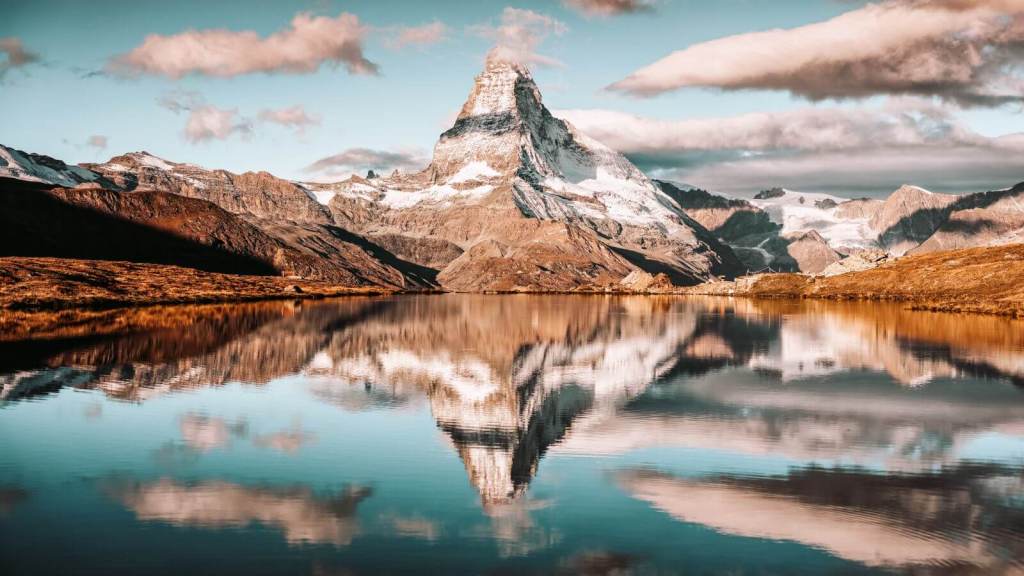
The Matterhorn is one of Switzerland’s most famous natural landmarks. At 14,691 feet (4,478 meters) above sea level, it’s also one of the highest peaks in the Alps and Europe. Straddling the Swiss-Italian border, the Matterhorn is recognized worldwide by its distinctive pyramid-shaped peak.
You might recognize the mountain’s dramatic peak from the Toblerone packaging, although it has since been removed. Capped with snow, this dramatic mountain is an impressive addition to an already postcard-perfect landscape. For the best views of the Matterhorn, head to one of the nearby glacial lakes it overlooks.
You can capture an epic photograph of the mountain and its reflection from the Stellisee and Grünsee.
Travel Tips
Stay in Zermatt: Spend 2-3 nights to fully explore the area.
Get a Peak Pass: Unlimited access to mountain transport systems.
Visit in Late Summer: The best weather is in August and September.
Dress in Layers: Be ready for quick temperature drops.
Lake Geneva, shared between Switzerland and France, is another iconic natural landmark you must visit if you get a chance. Covering 224 square miles (580 square kilometers), it’s the largest lake in Switzerland and the largest freshwater lake in Central Europe. Lake Geneva is a thing of beauty, surrounded by lush forest and the snow-capped mountains of the Alps.
Geneva, situated at the southern tip of the lake, is a great place to base yourself for visiting. Alternatively, you could stay in Évian-les-Bains on the French side of the lake. Either way, you can expect awe-inspiring views and picturesque hikes.
It’s also worth noting that many boat tours operate on the lake, offering spectacular views and laid-back experiences.
Travel Tips
Parking: Public parking is available, but it fills up quickly during busy times. Arrive early.
Boat Tour: Plan for 2 to 4 hours for a lake tour.
Transport Pass: Get a pass for unlimited boat and train travel around the lake.
Let’s not forget about Lake Lucerne in Central Switzerland, either. Like the Matterhorn and Lake Geneva, Lake Lucerne is one of the country’s most impressive natural landmarks. The fourth-largest lake in Switzerland features dazzling turquoise waters and is surrounded by towering mountains and vibrant forests.
The city of Lucerne sits on the western side of the lake. From here, you can admire the lake in all its glory and take photographs framed by the city’s historic architecture. Other popular Lake Lucerne viewpoints include Mount Pilatus and Meggenhorn.
You might also be pleased to hear that the Golden Pass train from Lucerne to Lake Geneva passes by the lake.
Travel Tips
Swiss Travel Pass: Get a Swiss Travel Pass for unlimited travel on trains, buses, and boats, including those on Lake Lucerne.
Explore Nearby Villages: Visit lakeside towns like Weggis and Vitznau. They offer great views, shops, and restaurants.
Pack a Picnic: Bring snacks or a picnic to enjoy along the shore. It’s a budget-friendly way to relax and take in the scenery.
Château Gütsch, in Lucerne, is one of Switzerland’s most historic landmarks. The castle hotel we see today results from over 400 years of construction and renovation. Standing proudly above Lucerne and its breathtaking lake, the construction of Château Gütsch first took place in 1590, when the Gütsch tower was built.
In 1859, Burkhand Pfyffer bought the land to run an inn on the hill. The Château section of the hotel was built in 1884. A fire destroyed large parts of Château Gütsch in 1888 but was restored in 1901.
The most recent renovations took place in 2021. Today, we’re left with a stunning building with outstanding views and a fascinating story. What more could we ask for?
Travel Tips
Take the Funicular: Use the Gütsch Funicular for a quick, scenic ride to the castle in about 100 seconds.
Enjoy a Meal at the Restaurant: Dine at the castle’s restaurant for great food and views of Lucerne and the lake.
Explore the Surrounding Park: Walk nearby for beautiful paths and gardens.
The Lion Monument, also known as the Lion of Lucerne, is one of the most famous landmarks in Lucerne. It’s a beautiful sculpture carved into the rock in the city center. Unsurprisingly, the sculpture is a lion.
The monument was designed by Bertel Thorvaldsen and sculpted by Lukas Ahorn between 1820 and 1821. The sculpture looks magnificent, but its story will steal your heart. The Lion Monument is a tribute to the Swiss Guards killed in 1792 during the French Revolution.
The sculpture sits behind a small pond off Denkmalstrasse, just a short walk from the shores of Lake Lucerne. You could easily visit Lake Lucerne, the Lion Monument, and Château Gütsch in one day.
Travel Tips
Visit Early or Late: Go in the morning or late afternoon to avoid crowds.
Bring a Camera: The monument and its surroundings are picturesque.
Explore Nearby Attractions: Visit sights like Glacier Garden or Chapel Bridge.
Hôtel Belvédère, located on the Furka Pass, is one of Switzerland’s most unique landmarks. The Furka Pass is a 7,969-foot (2,429-meter) high mountain pass in the Swiss Alps. It connects Gletsch, Valais, and Realp.
On one of the pass’s many hairpin bends sits the historic Hôtel Belvédère. Many consider Hôtel Belvédère to be the most recognizable hotel in the world. Its precarious location, impressive surroundings, and alpine-style architecture are a joy.
Josef Seiler initially constructed the hotel as a lodge in the 1880s. It became a hotel in 1890. Sadly, though, Hôtel Belvédère is now abandoned, so visitors can no longer stay there. However, you can still drive past it.
Travel Tips
Save this
We'll email this post to you, so you can come back to it later.
Check Road Conditions: Make sure the Furka Pass is open and safe for driving, especially during winter or early spring.
Plan for Scenic Stops: Enjoy the stunning views by stopping at scenic spots like the Rhone Glacier to take photos.
Visit During the Week: To avoid crowds, visit on weekdays for a more peaceful experience.
Oberhofen Castle, also known as Schloss Oberhofen, is one of Switzerland’s most famous castles. This fairytale-esque structure in central Switzerland sits alongside Lake Thun. The castle’s history dates back to the 13th century, and its central keep still stands strong today.
During its long history, the building has had several private owners, but an independent foundation now owns it. As such, visitors are allowed to explore the castle and its grounds. Inside, you’ll find a museum of Bernese culture. Here, you can explore over eight centuries of history that have helped shape the castle.
Federal Palace in Bern is one of Switzerland’s most important landmarks. Also known as the Parliament Building, it houses the Swiss Federal Assembly and the Federal Council. Approximately 984 feet (300 meters) long, it was built between 1852 and 1902.
Aside from its political importance, the Federal Palace is an incredibly beautiful building. Its Neo-Renaissance architecture, with intricate stonework and a grand dome, is simply stunning. You can take a guided tour of the palace to learn more about the country’s political history.
It is also recommended that you visit the palace at night. At night, the Federal Palace is lit with bright yellow lights, creating a scene you don’t want to miss.
Travel Tips
Reserve Your Tour in Advance: Book a guided tour ahead of time, especially during busy seasons.
Explore the Surrounding Area: Visit Bundesplatz for events, markets, and local atmosphere.
Check for Special Events: Look for open days or cultural events at the palace.
Rhine Falls, near Schaffhausen, Northern Switzerland, is Europe’s largest waterfall. As you would expect, it’s a mesmerizing spectacle, whether you observe it from a nearby viewpoint or on a boat trip. At 75 feet (23 meters) high, Rhine Falls might not be one of the tallest waterfalls in Europe, but its 492-foot (150-meter) width is nothing to be sniffed at.
Formed over 14,000 years ago, the falls must be witnessed for their raw power and untamed nature. A boat tour will allow you to get closer to the falls, but the views from the observation viewing platform are equally impressive.
On July 31st, fireworks are set off from the rock in Rhine Falls, adding extra magic to an already spectacular destination.
Travel Tips
Choose the Right Time to Visit: Visit in late spring or summer for the best water flow and most impressive views.
Take a Boat Tour: Get close to the falls by boat for a thrilling experience and unique views.
Explore Both Sides: Visit both the northern and southern sides for different perspectives.
Trummelbach Falls is a stunning series of glacier-fed waterfalls in Bernese Oberland. Rhine Falls might be the largest waterfall in Europe, but they aren’t as impressive as Trummelbach Falls. Interestingly, these falls are also the largest subterranean waterfalls in Europe.
Furthermore, they’re the world’s only glacier waterfalls accessible underground by lift, tunnels, paths, galleries, and platforms. They carry up to 20,000 liters of glacial water per second, and the sheer power and beauty of the walls are magnificent.
You’ll also love the thunderous noise of rocks plummeting over the falls into the caves below. You should note that, for safety reasons, children under four are not allowed to visit Trummelbach Falls.
Travel Tips
Wear Proper Footwear: Wear sturdy shoes with a good grip to avoid slipping on wet paths from the waterfall spray.
Plan for Weather Changes: Check the weather before visiting. Bad weather may lead to closures, so have a backup plan.
Staubbach Falls in Lauterbrunnen is one of the most beautiful natural wonders in Switzerland. This breathtaking waterfall cascades 974 feet (297 meters) over a tall cliff above the lush valley below. Its height makes it the highest free-falling waterfall in the country.
Admittedly, it’s not just the falls that make this landmark so special. The mountainous landscape, picturesque valley, and traditional Swiss buildings surrounding it help create an alluring setting. As if things couldn’t get any better, the falls are illuminated by floodlights in the peak season.
If you want to get closer to the falls, you can follow a cliff path to a viewing platform behind them.
Travel Tips
Bring a Rain Jacket: If you plan to walk behind the falls, a rain jacket or poncho will help you stay dry from the waterfall spray.
Visit Early or Late: Go early in the morning or late in the afternoon to avoid crowds and get better photos.
Château de Chillon is one of the most beautiful landmarks in Switzerland. It sits on a small island off Lake Geneva’s eastern shoreline and is best known for its impressive appearance. The fairytale-style castle we can see today is the culmination of several centuries of construction and renovation.
Excavations at the castle reveal that the site has been occupied since the bronze age. One interesting fact about the castle is that it features the oval shape of the island it sits on. It’s approximately 328 feet (100 meters) long and 164 feet (50 meters) wide.
On a guided tour, you can learn about the castle’s history. You might also like to know that some guided tours include wine tasting.
Travel Tips
Arrive Early: Visit in the morning to avoid crowds.
Take an Audio Guide: Rent an audio guide for detailed information about the castle’s history.
Enjoy the Lakeside Walk: After your visit, walk along the lakeside path for stunning views of Lake Geneva and the castle.
Jack is a freelance content writer from the U.K. He writes about travel, health & lifestyle, and food amongst other things. As a passionate traveler, he’s always in search of his next big adventure, and ways to save his readers money on their next trip.


 © ecstk22 / Shutterstock

 © biletskiyevgeniy.com / Adobe Stock
 © matho / Adobe Stock
 © Michal Ludwiczak / Adobe Stock
 1
1
 2
2
 3
3
 4
4
 5
5